Choosing the right ERP system can make or break your business transformation. The ERP selection process isn’t just about software—it’s about aligning technology with your goals, people, and processes. Let’s dive into how to get it right.
Understanding the ERP Selection Process

The ERP selection process is a strategic journey that organizations undertake to identify, evaluate, and implement an Enterprise Resource Planning (ERP) system that best fits their operational, financial, and technological needs. It’s not a one-size-fits-all solution; rather, it’s a tailored approach that considers the unique structure, goals, and challenges of a business.




What Is ERP and Why It Matters
ERP, or Enterprise Resource Planning, is a suite of integrated applications that manage core business processes in real time. From finance and HR to supply chain and customer relationship management, ERP systems unify data across departments, eliminating silos and improving decision-making.
- Centralizes business data for better visibility
- Automates repetitive tasks to increase efficiency
- Enhances reporting and analytics capabilities
According to Gartner, ERP systems are foundational for digital transformation, enabling organizations to respond faster to market changes.
Common Misconceptions About ERP
Many companies enter the ERP selection process with outdated assumptions. One common myth is that ERP is only for large enterprises. In reality, cloud-based ERP solutions have made the technology accessible to small and mid-sized businesses.
- Myth: ERP is too expensive for SMEs → Reality: Subscription models reduce upfront costs
- Myth: Implementation takes years → Reality: Modern ERPs can go live in weeks
- Myth: ERP is just accounting software → Reality: It covers end-to-end business operations
“ERP is not just a technology project; it’s a business transformation initiative.” — Panorama Consulting Solutions
Step 1: Define Your Business Requirements
The first and most critical phase of the ERP selection process is defining what your business actually needs. Without clear requirements, you risk choosing a system that looks good on paper but fails in practice.
Conduct a Business Process Assessment
Start by mapping your current workflows across departments. Identify pain points, inefficiencies, and bottlenecks. This assessment helps you understand which processes need improvement and where automation can add value.
- Map order-to-cash, procure-to-pay, and record-to-report cycles
- Interview stakeholders from finance, operations, sales, and IT
- Document current software usage and integration needs
A thorough process assessment ensures that your ERP selection process is grounded in real-world operations, not just theoretical ideals.
Identify Functional and Technical Requirements
Functional requirements describe what the ERP system must do—such as managing inventory, processing payroll, or generating financial reports. Technical requirements, on the other hand, relate to infrastructure, security, scalability, and integration capabilities.
- Functional: Must support multi-currency transactions, project accounting, and CRM
- Technical: Must integrate with existing CRM, run on cloud infrastructure, support API-based connections
Tools like requirement matrices can help prioritize needs. For example, categorize requirements as “must-have,” “should-have,” “could-have,” and “won’t-have” (MoSCoW method).
“80% of ERP project failures stem from poorly defined requirements.” — Nucleus Research
Step 2: Assemble the Right Selection Team
The ERP selection process is too important to be left to a single department. A cross-functional team ensures diverse perspectives and increases buy-in across the organization.
Key Roles in the ERP Selection Team
Building the right team involves more than just assigning titles. Each member should have decision-making authority or deep operational knowledge.
- Project Sponsor (C-level executive): Provides budget and strategic direction
- Project Manager: Oversees timelines, resources, and deliverables
- Department Heads (Finance, Operations, HR, IT): Represent user needs
- End-Users: Provide ground-level feedback on usability
According to Panorama Consulting, companies with strong executive sponsorship are 50% more likely to have successful ERP implementations.
Define Team Responsibilities and Governance
Clear roles prevent confusion and ensure accountability. Establish a governance model that outlines decision-making processes, meeting cadence, and escalation paths.
- Weekly status meetings to track progress
- Decision logs to document key choices
- Change management protocols for scope adjustments
A well-structured team doesn’t just select software—it drives adoption and long-term success.
Step 3: Evaluate ERP Deployment Options
One of the pivotal decisions in the ERP selection process is choosing the right deployment model. The three main options are on-premise, cloud, and hybrid ERP systems.
On-Premise ERP: Control vs. Cost
On-premise ERP systems are installed and run on the company’s own servers. They offer maximum control over data and customization but come with high upfront costs and maintenance responsibilities.
erp selection process – Erp selection process menjadi aspek penting yang dibahas di sini.
- Pros: Full control over security, deep customization, offline access
- Cons: High CapEx, longer implementation, IT team required for maintenance
This model suits large enterprises with complex processes and strict compliance needs, such as manufacturing or defense sectors.
Cloud ERP: Agility and Scalability
Cloud ERP is hosted by a third-party provider and accessed via the internet. It’s subscription-based, making it more affordable and faster to deploy.
- Pros: Lower upfront cost, automatic updates, remote access, faster ROI
- Cons: Less customization, dependency on vendor, internet dependency
According to IDC, over 60% of new ERP implementations are now cloud-based, driven by demand for flexibility and digital transformation.
“Cloud ERP adoption is growing at 17% annually, outpacing on-premise solutions.” — IDC
Step 4: Shortlist and Evaluate ERP Vendors
With hundreds of ERP vendors in the market, narrowing down the list can be overwhelming. A structured evaluation process ensures you focus on solutions that truly fit your needs.
Create a Vendor Shortlist
Start by researching vendors that serve your industry and company size. Use analyst reports from Gartner or Forrester to identify leaders in the field.
- Filter by industry specialization (e.g., manufacturing, retail, healthcare)
- Consider vendor reputation, financial stability, and customer support
- Check for certifications (e.g., ISO, SOC 2)
Typical vendors include SAP, Oracle, Microsoft Dynamics 365, NetSuite, and Infor—each with different strengths.
Conduct RFPs and Demos
A Request for Proposal (RFP) is a formal document that outlines your requirements and invites vendors to respond. It should include:
- Company background and project goals
- Detailed functional and technical requirements
- Implementation timeline and budget expectations
- Support and training offerings
After receiving responses, schedule live demonstrations. Don’t let vendors control the demo—use your own data and scenarios to test real-world usability.
“A demo should reflect your business processes, not the vendor’s script.” — ERP Focus
Step 5: Analyze Total Cost of Ownership (TCO)
The ERP selection process isn’t just about the sticker price. Total Cost of Ownership (TCO) includes all direct and indirect costs over the system’s lifecycle.
Breakdown of ERP Costs
Understanding the full cost structure helps avoid budget overruns and surprises.
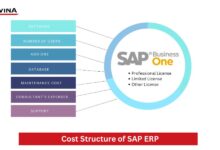
- Licensing fees (per user, per module)
- Implementation services (consulting, data migration, testing)
- Hardware (if on-premise) or cloud subscription fees
- Training, change management, and ongoing support
- Upgrades and customization costs
A 2023 study by Panorama Consulting found that the average ERP project exceeds its budget by 45%, often due to underestimated implementation and training costs.
Hidden Costs to Watch For
Some costs aren’t immediately obvious but can significantly impact your budget.
- Data cleansing and migration complexity
- Customization that breaks during upgrades
- Downtime during go-live
- Lost productivity during user adaptation
To mitigate risks, request detailed pricing models and ask vendors for case studies with similar clients.
“The cheapest ERP license can become the most expensive system due to hidden costs.” — ERP Today
Step 6: Plan for Implementation and Change Management
Selecting the right ERP is only half the battle. The implementation phase is where many projects fail. A solid plan and change management strategy are essential.
Choose the Right Implementation Methodology
Different ERP vendors use different methodologies, such as Agile, Waterfall, or hybrid approaches.
- Agile: Iterative, flexible, ideal for complex or evolving requirements
- Waterfall: Linear, structured, better for well-defined projects
- Hybrid: Combines planning with flexibility
Microsoft Dynamics 365, for example, often uses a phased Agile approach, while SAP S/4HANA may follow a more structured timeline.
Drive User Adoption Through Change Management
Even the best ERP system will fail if employees resist using it. Change management is about preparing people for the transition.
erp selection process – Erp selection process menjadi aspek penting yang dibahas di sini.
- Communicate the ‘why’ behind the ERP project early and often
- Provide role-based training and super-users
- Address fears and gather feedback through workshops
According to McKinsey, 70% of change initiatives fail due to lack of employee engagement.
“Technology is the easy part; people are the hard part of ERP.” — Harvard Business Review
Step 7: Test, Deploy, and Optimize
The final phase of the ERP selection process is execution—but the work doesn’t end at go-live. Continuous optimization ensures long-term success.
Conduct Rigorous Testing
Before going live, run multiple testing cycles to ensure data accuracy, process integrity, and system performance.
- Unit testing: Validate individual modules
- Integration testing: Ensure modules work together
- User acceptance testing (UAT): Let end-users validate real-world scenarios
Fix issues early. A single data mapping error can disrupt payroll or inventory.
Go-Live and Post-Implementation Review
The go-live moment is critical. Plan for a phased rollout or parallel run to minimize risk.
- Monitor system performance and user feedback
- Have a rollback plan in case of critical failure
- Conduct a post-implementation review after 30, 60, and 90 days
Optimization never stops. Use analytics to identify inefficiencies and plan for future upgrades.
“ERP is not a destination; it’s a journey of continuous improvement.” — Deloitte
What is the most important step in the ERP selection process?
The most important step is defining your business requirements. Without a clear understanding of your needs, even the most advanced ERP system will fail to deliver value. This foundational step guides every other decision, from vendor selection to implementation strategy.
How long does the ERP selection process take?
The ERP selection process typically takes 3 to 6 months, depending on the size and complexity of the organization. Smaller businesses may complete it in 8–12 weeks, while large enterprises with global operations can take over a year.
Should we choose a cloud or on-premise ERP system?
The choice depends on your business needs. Cloud ERP is ideal for companies seeking lower upfront costs, faster deployment, and scalability. On-premise ERP suits organizations needing full control over data and deep customization. Most mid-sized and growing businesses now prefer cloud solutions.
What are the biggest risks in the ERP selection process?
Key risks include unclear requirements, lack of executive support, underestimating costs, poor change management, and choosing a vendor without industry experience. Mitigate these by following a structured process, involving stakeholders early, and conducting thorough due diligence.
How do we ensure user adoption after ERP implementation?
Ensure adoption by involving users early, providing hands-on training, appointing internal champions, and communicating benefits clearly. Address resistance proactively and continuously gather feedback to improve the system.
Selecting the right ERP system is a powerful step toward business transformation. By following a structured ERP selection process—defining requirements, assembling the right team, evaluating options, and planning for change—you set the stage for long-term success. Remember, it’s not just about software; it’s about aligning technology with your people and processes. Take the time to get it right, and your ERP investment will pay dividends for years to come.
erp selection process – Erp selection process menjadi aspek penting yang dibahas di sini.
Further Reading:
